
Search North Carolina Criminal Records
North Carolina criminal records are public documents kept by the Clerk of Superior Court in each of the state's 100 counties. These records cover arrests, charges, court cases, and convictions across the North Carolina court system. You can search criminal records online through the eCourts portal, at public access terminals in any courthouse, or by contacting the clerk's office in the county where the case was filed. The North Carolina State Bureau of Investigation also provides statewide criminal background checks through fingerprint-based searches. Whether you need court case details or a full criminal history report, North Carolina offers several ways to find the records you need.
North Carolina Criminal Records Quick Facts
Where to Find North Carolina Criminal Records
Criminal records in North Carolina are held by several agencies at the state and county level. The Clerk of Superior Court in each county is the main source for court case records. These offices store files for every criminal case heard in that county. Case files contain the charges, arrest details, plea information, and final disposition. You can visit any clerk's office in person to search criminal records at no cost using public access terminals. The North Carolina Judicial Branch provides an online portal where you can search court records by name, case number, or attorney across all 100 counties.
The North Carolina State Bureau of Investigation serves as the central repository for criminal history data statewide. The SBI conducts fingerprint-based checks against both state and federal databases. Individuals can request a copy of their own criminal record by submitting a "Right to Review" form along with a fingerprint card. The cost is $14 for the SBI search, and sheriff's departments charge $10 to $25 to complete the fingerprint card. This is the most thorough way to get a full criminal history in North Carolina.
The North Carolina Judicial Branch provides a central portal for searching criminal records and court records across all counties.
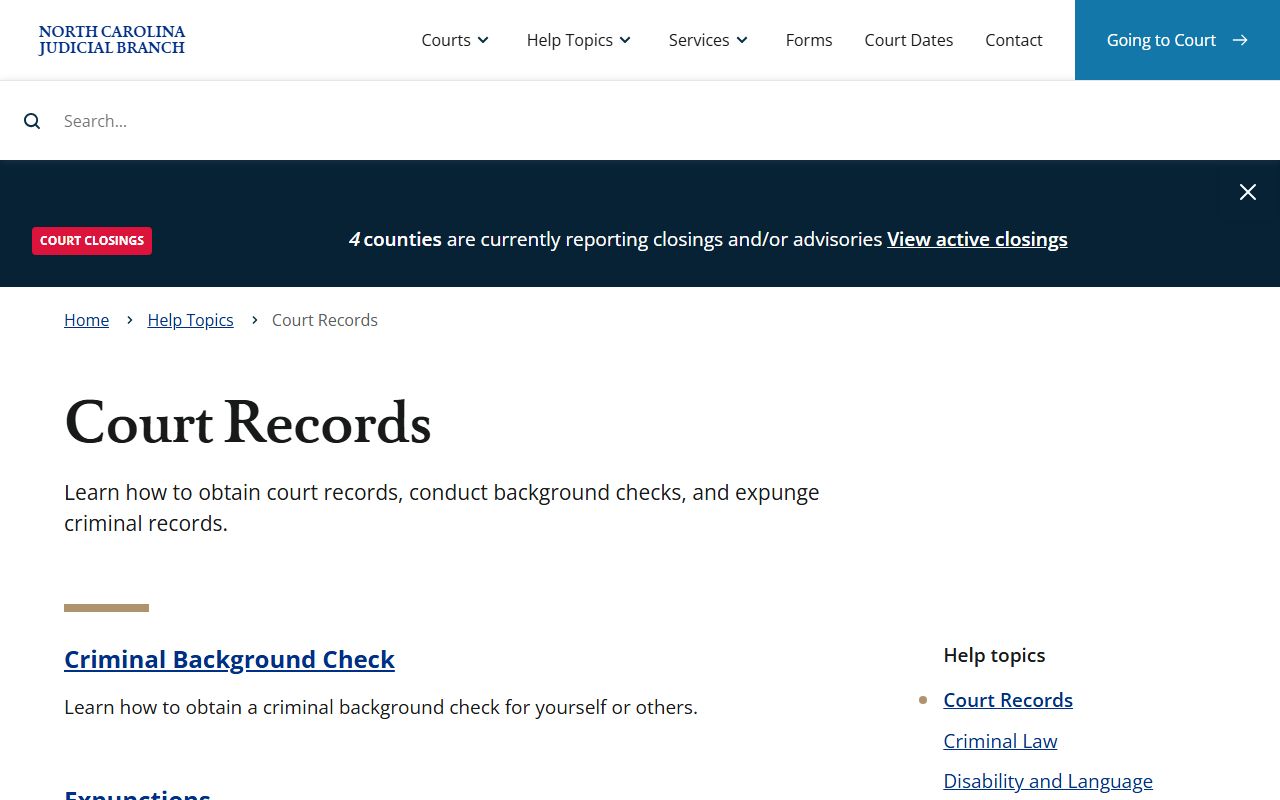
The portal displays criminal case details including charges, court dates, and dispositions for arrest records filed in every county.
The North Carolina Department of Adult Correction maintains criminal records for individuals who served time in state prison facilities or are under community supervision. Their Offender Search tool contains records dating back to 1972. It does not include county jail data. This resource is useful for finding arrest records and criminal records for state prisoners, probationers, and parolees.
Note: No single court official in North Carolina can provide a certified statewide criminal record search.
How to Search Criminal Records in North Carolina
North Carolina offers several ways to look up criminal records and court records. The fastest method for most people is the eCourts portal, which provides online access to court records in participating counties. You can search criminal records by name or case number at no cost. The system shows criminal case details, court dates, and filing information. Many counties have already transitioned to eCourts, with the rest scheduled for 2025. For counties not yet on eCourts, the older ACIS system is available at courthouse terminals.
The North Carolina court system offers an online search interface for criminal records and court records.
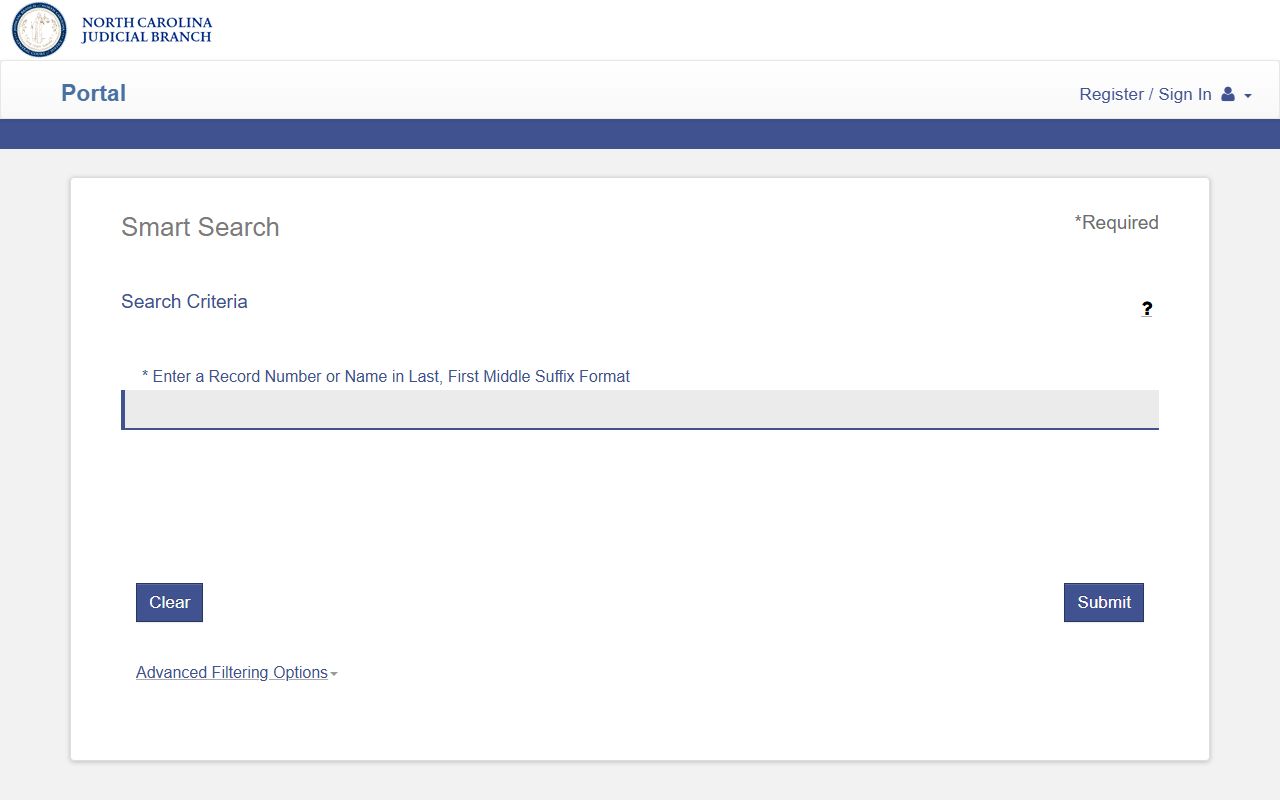
Search results show criminal case numbers, charges, arrest records, and disposition details for cases filed across all participating counties.
To search criminal records in North Carolina, you typically need:
- Full name of the person
- County where the case was filed
- Date of birth or case number if available
- Valid photo ID for in-person requests
You can also search criminal records in person at any Clerk of Superior Court office. Public self-service terminals at every courthouse let you search criminal case records and court records at no charge. Staff can help you find arrest records and make copies. Certified copies of criminal records cost $25 per name search. Uncertified copies of court records run $0.25 per page. For a statewide criminal background check, submit form AOC-CR-314 to the clerk's office. Mail requests for criminal records are also accepted at most county offices.
The SBI provides the most complete criminal history search available in North Carolina. Their fingerprint-based criminal background check searches both state and FBI databases. This is the only way to get a comprehensive statewide criminal record in North Carolina.
Types of Criminal Records in North Carolina
Criminal records in North Carolina fall into several categories. Court records document the full legal proceedings from initial filing through final disposition. These criminal case records include the charging document, motions, plea entries, trial transcripts, sentencing orders, and probation records. The Clerk of Superior Court keeps all criminal records in the case file. You can review any part of a criminal case file at the courthouse.
Arrest records show that a person was taken into custody by law enforcement. Under N.C.G.S. § 132-1.4, certain arrest information is public. This includes the name, age, address, and alleged violation of the arrested person, along with the time and place of arrest. Sheriff's offices maintain arrest records across the state. Many provide online access through inmate search tools or Police to Citizen portals.
The State Bureau of Investigation provides criminal background checks and maintains the central criminal records database.
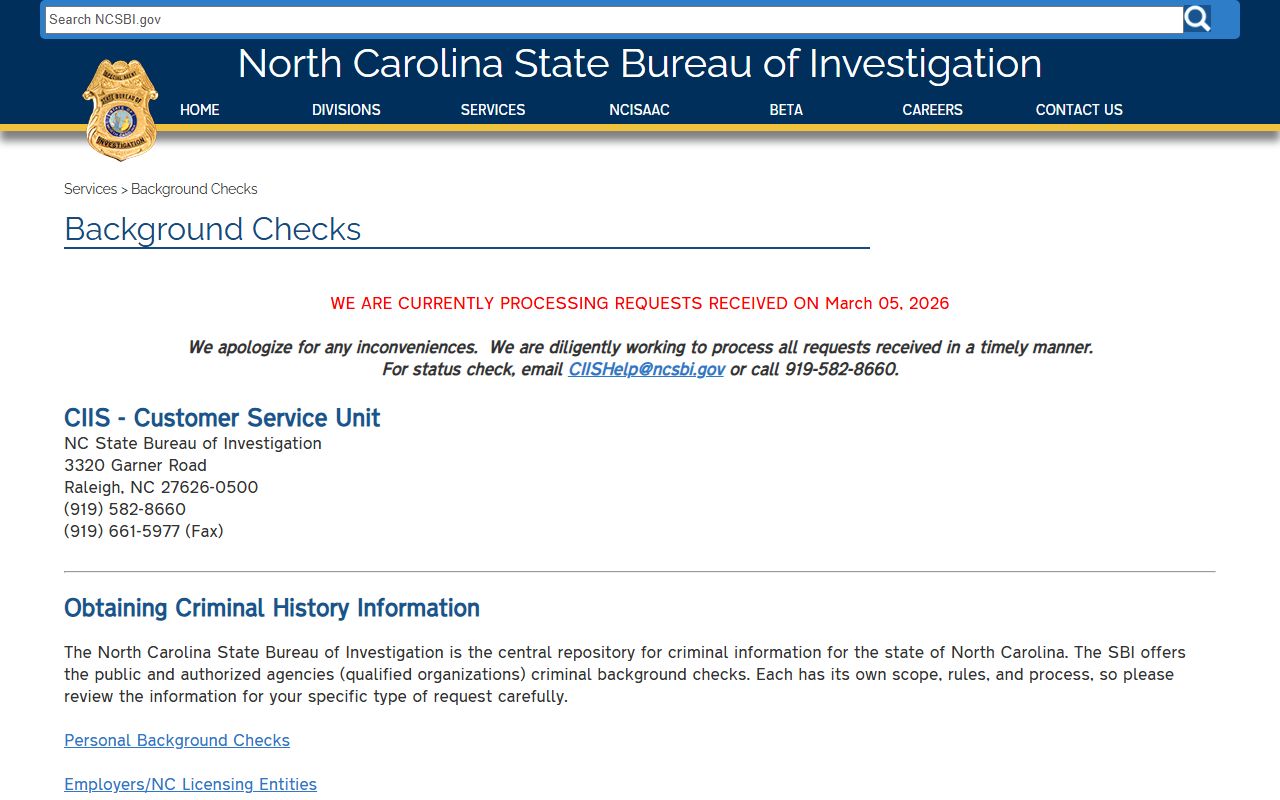
The SBI criminal records database includes arrest records, court records, and conviction data from law enforcement agencies across all 100 counties.
The Superior Court handles felony criminal cases and civil matters over $25,000 in North Carolina. The District Court processes misdemeanor criminal cases, traffic violations, and juvenile matters. Both courts maintain separate calendars but share the clerk's office for criminal record keeping. Court records from either court level are accessible through the same channels in North Carolina.
North Carolina Criminal Records and Public Access
Criminal records in North Carolina are generally public under the North Carolina Public Records Act, Chapter 132. The law states that public records are "the property of the people" and should be available at minimal cost. This applies to court records, arrest records, and most other criminal records created by government agencies. Anyone can request to view criminal records. You do not need to be a party to the case.
The North Carolina General Statutes outline which criminal records and court records are available to the public.
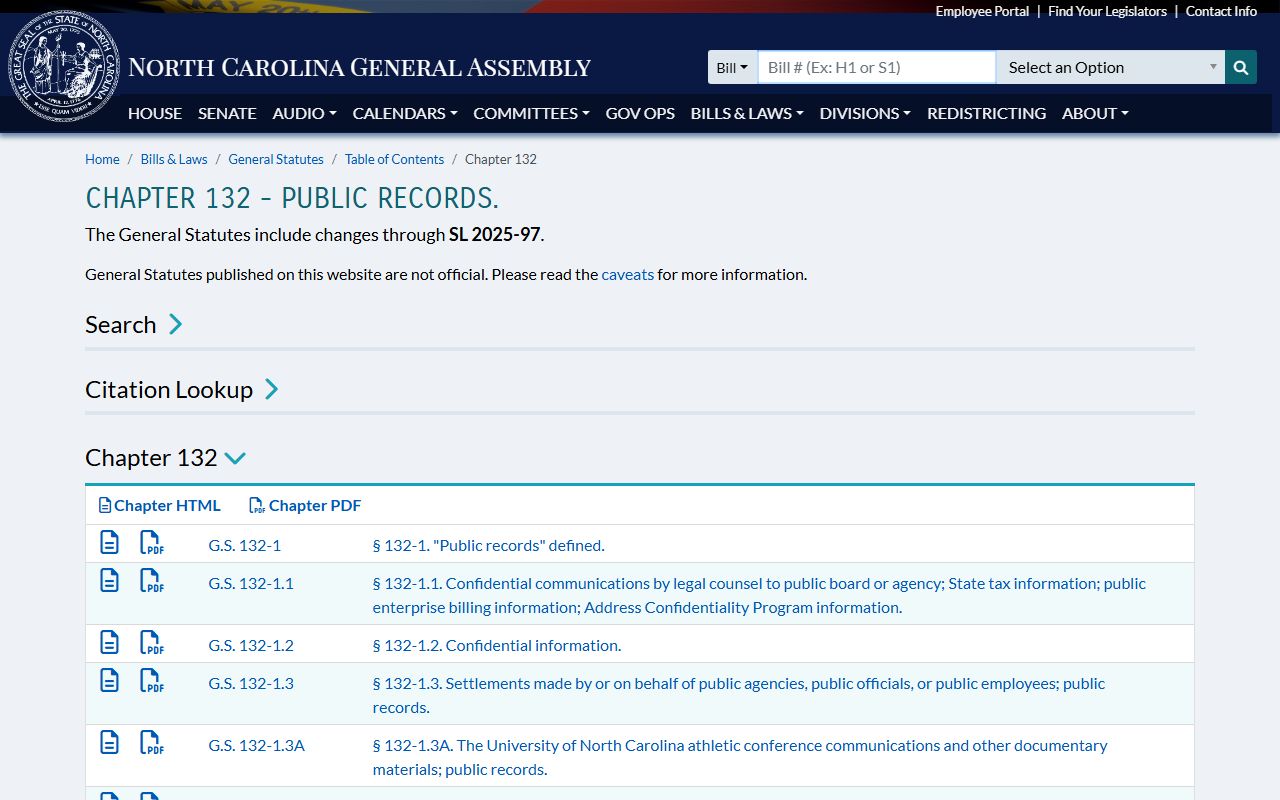
The public records law covers arrest records, court records, and criminal case files maintained by clerks and law enforcement agencies statewide.
Some criminal records have restricted access. Under N.C.G.S. § 132-1.4, active criminal investigation files are not public records. Juvenile criminal case records receive special protection under state law. Records that have been expunged are removed from public databases. Sealed criminal records require a court order to access. Body-worn camera and dashboard camera footage from law enforcement is governed by N.C.G.S. § 132-1.4A and requires a court order for release.
Under N.C.G.S. § 132-1, every custodian of public records must allow inspection at reasonable times. This means you can walk into a clerk's office during business hours and view criminal records at no charge in North Carolina.
Criminal Record Expunctions in North Carolina
North Carolina law allows certain criminal records to be expunged. An expunction removes the record from public view. After expunction, the person may legally state the offense did not occur in most situations. The North Carolina Judicial Branch provides detailed guidance on how to file for expunctions.
Several types of expunctions are available for criminal records in North Carolina. Dismissed charges and not guilty findings can be expunged, and since December 2021, many dismissals are processed automatically within 180 to 210 days. Under N.C.G.S. § 15A-145, first offenders under age 18 can petition for expunction of certain criminal records after a two-year waiting period. The filing fee is $175, though it may be waived for those who qualify as indigent. For adults, N.C.G.S. § 15A-145.5 provides the broadest pathway. Waiting periods range from 3 years for a single nonviolent misdemeanor to 15 years for certain felonies.
The North Carolina expunction statutes detail which criminal records qualify for removal from public databases.
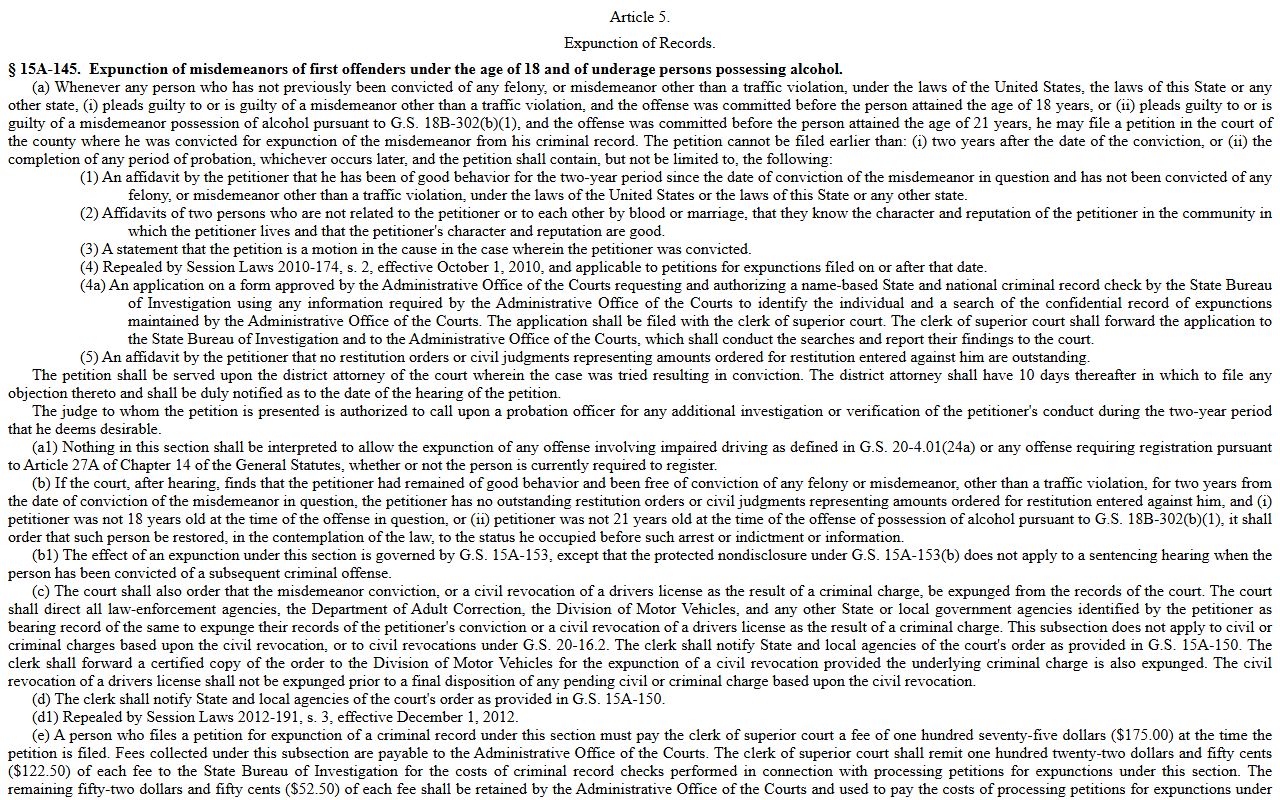
The statute covers expunction of arrest records, criminal case records, and court records for qualifying offenses.
Not all criminal records can be expunged in North Carolina. Violent felonies, certain sex offenses, and impaired driving convictions are excluded. You can only use this expunction pathway once in your lifetime. To file, submit a petition to the Clerk of Superior Court in the North Carolina county where the charge or conviction occurred.
Note: Once an expunction is granted, all agencies must remove the record from their databases, including the courts, law enforcement, and the SBI.
North Carolina Sex Offender Criminal Records Registry
The North Carolina Sex Offender and Public Protection Registry was created in January 1996 under NCGS 14-208.5. The SBI maintains this criminal records database. It is free to search online. You can look up offenders by name, address, or proximity to a school.
The SBI sex offender registry is a searchable criminal records database containing conviction details for registered offenders.
Registry entries include criminal conviction details, arrest records, photos, and current addresses for each registered sex offender.
The registry shows photos, addresses, physical descriptions, and criminal conviction details for each registered offender in North Carolina. Registration periods vary. Some offenders must register for 30 years. Others register for life. All must verify their registration with the local sheriff at regular intervals in North Carolina. Failure to register is a felony under state criminal law. Law enforcement agencies actively monitor compliance across all 100 counties.
Criminal Record Fees in North Carolina
Fees for criminal records depend on the type of record and where you get it. Court records are available at the Clerk of Superior Court in each county. Certified copies of criminal records cost $25 per name search. Uncertified copies of court records cost $0.25 per page. Searching criminal records at public access terminals is free.
The SBI charges $14 for a fingerprint-based criminal history check. Sheriff's offices charge $10 to $25 for fingerprint card completion for criminal background checks. Some counties offer additional criminal record services with their own fee schedules. The Department of Adult Correction provides online criminal records searches at no cost.
Note: Fees can change, so confirm current costs with the specific office before making your request.
Historical Criminal Records in North Carolina
The North Carolina State Archives holds historical criminal records and court records dating back to the colonial period. These include criminal court minutes, case files, and other legal documents from across the state. Many criminal records have been digitized and are available through the Digital Collections website. Researchers can also visit the State Archives in Raleigh to access materials that have not been digitized.
The Department of Adult Correction maintains criminal records for offenders in the state prison system.
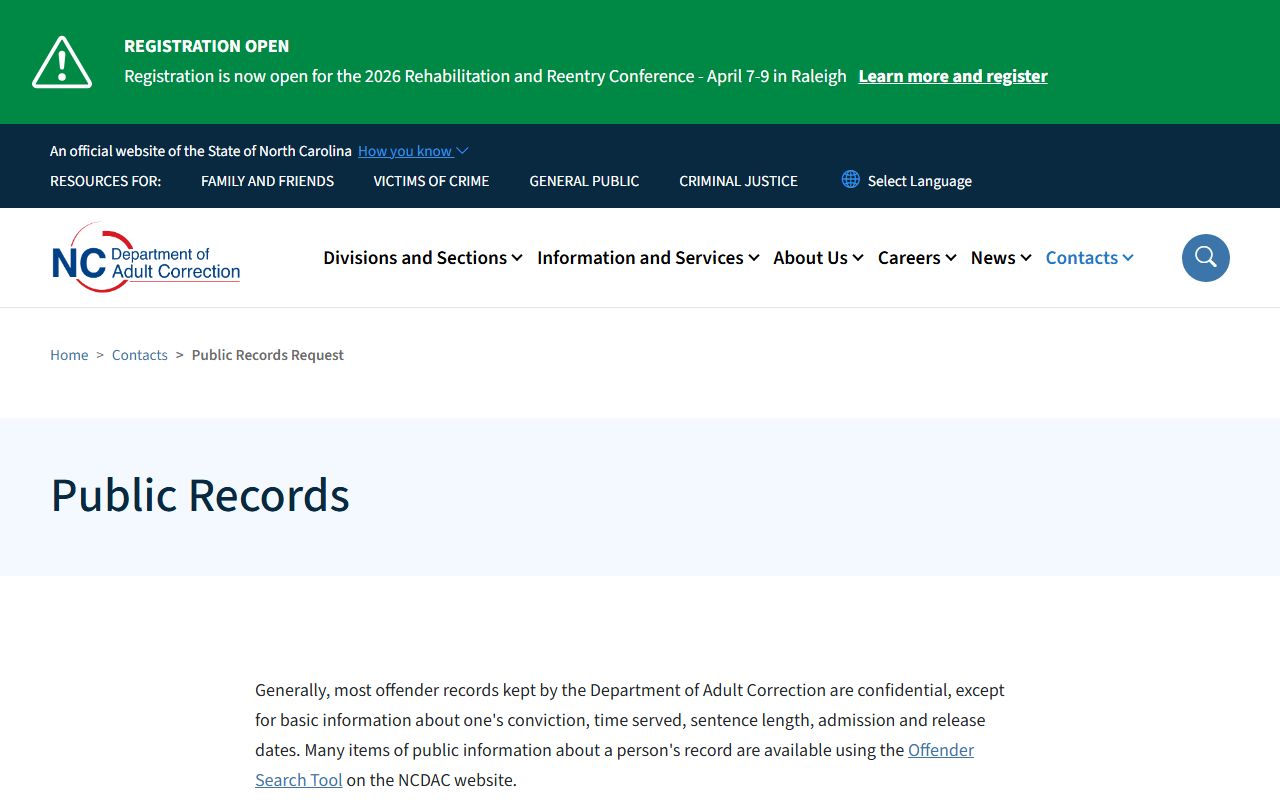
The offender database includes criminal records, arrest records, and incarceration details for individuals under state supervision.
For current criminal records, the clerk's office in each county is the best starting point. The eCourts system is expanding public access to electronic court records statewide. As more counties transition to the new system, online access to criminal records continues to improve for residents and researchers alike.
North Carolina Criminal Records Statutes
Several state laws govern how criminal records are created, maintained, and accessed. The Public Records Act under N.C.G.S. § 132-1 establishes the right of public access to criminal records and court records. Criminal investigation records are covered under N.C.G.S. § 132-1.4. Law enforcement recordings fall under N.C.G.S. § 132-1.4A. Expunction laws for criminal records are found in N.C.G.S. § 15A-145 through N.C.G.S. § 15A-145.5. These statutes together form the framework for criminal record access in the state.
The North Carolina General Statutes Chapter 132 defines how criminal records and court records are classified as public records.
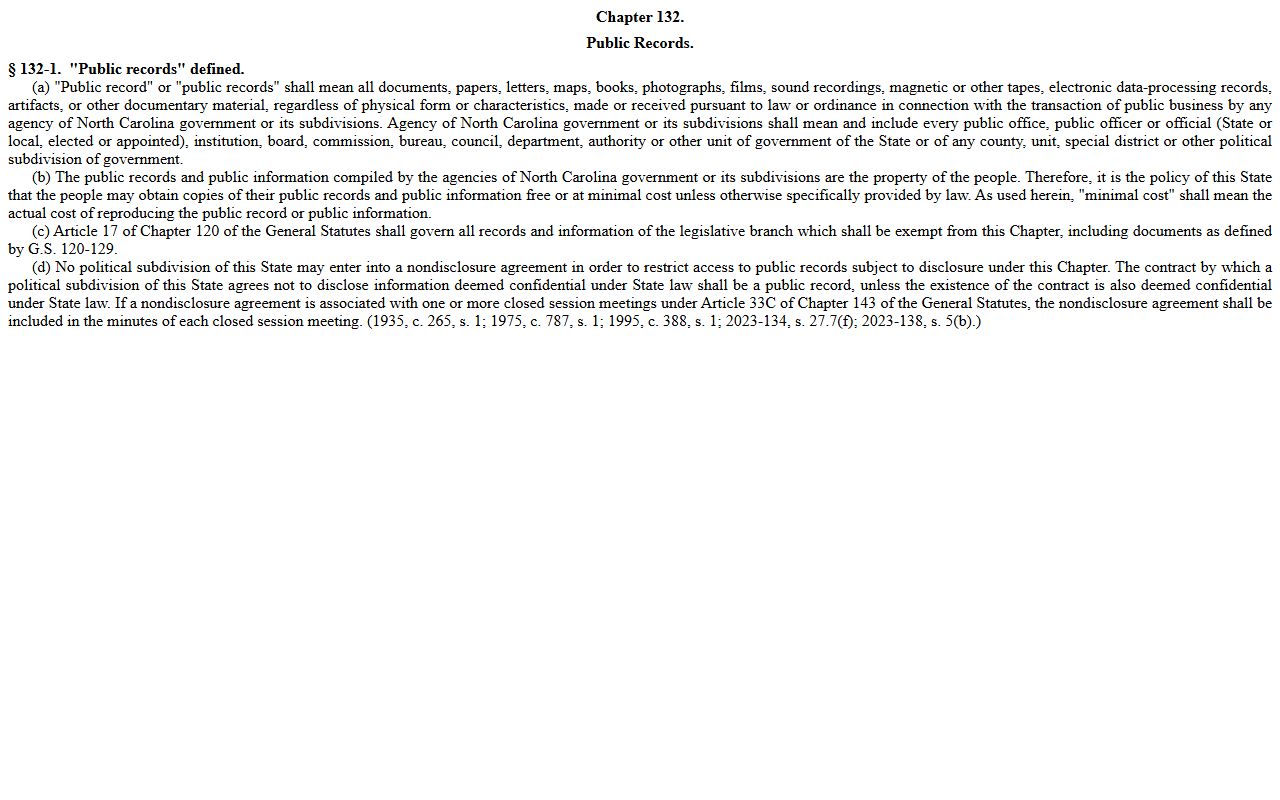
This statute establishes the foundation for public access to criminal records, arrest records, and court records maintained by government agencies.
The criminal investigation records statute specifies which arrest records and criminal case files are exempt from public disclosure.
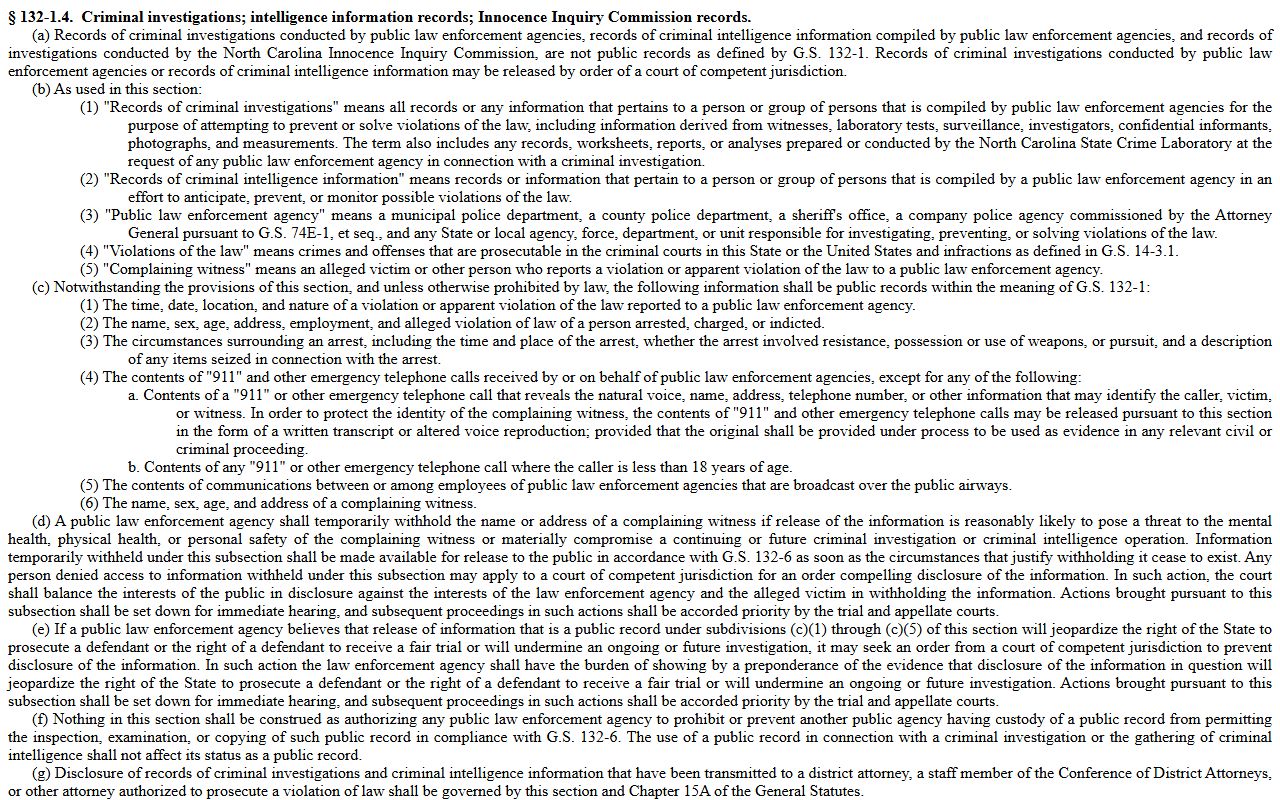
Active criminal investigation files, informant identities, and certain law enforcement records are protected from public access under this provision.
Understanding these laws helps you know what criminal records you can access and how to get them. The public records law sets the default that most criminal records are open. The exceptions carved out for investigations, juveniles, and expunged records protect specific interests while keeping the system transparent.
The law enforcement recordings statute governs access to body camera footage related to criminal cases and arrest records.
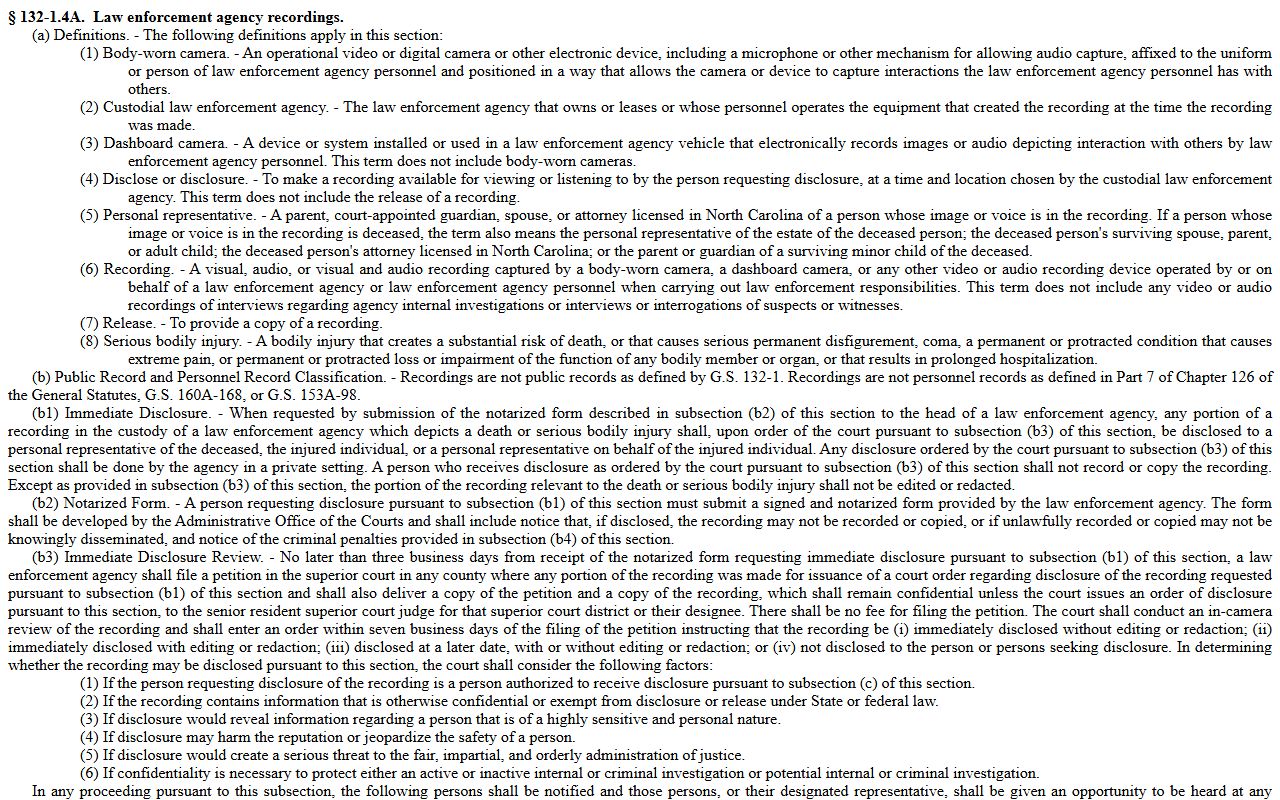
This statute requires a court order before law enforcement recordings tied to criminal records can be released to the public.
The expunction statutes outline the process for removing criminal records from public court records databases.
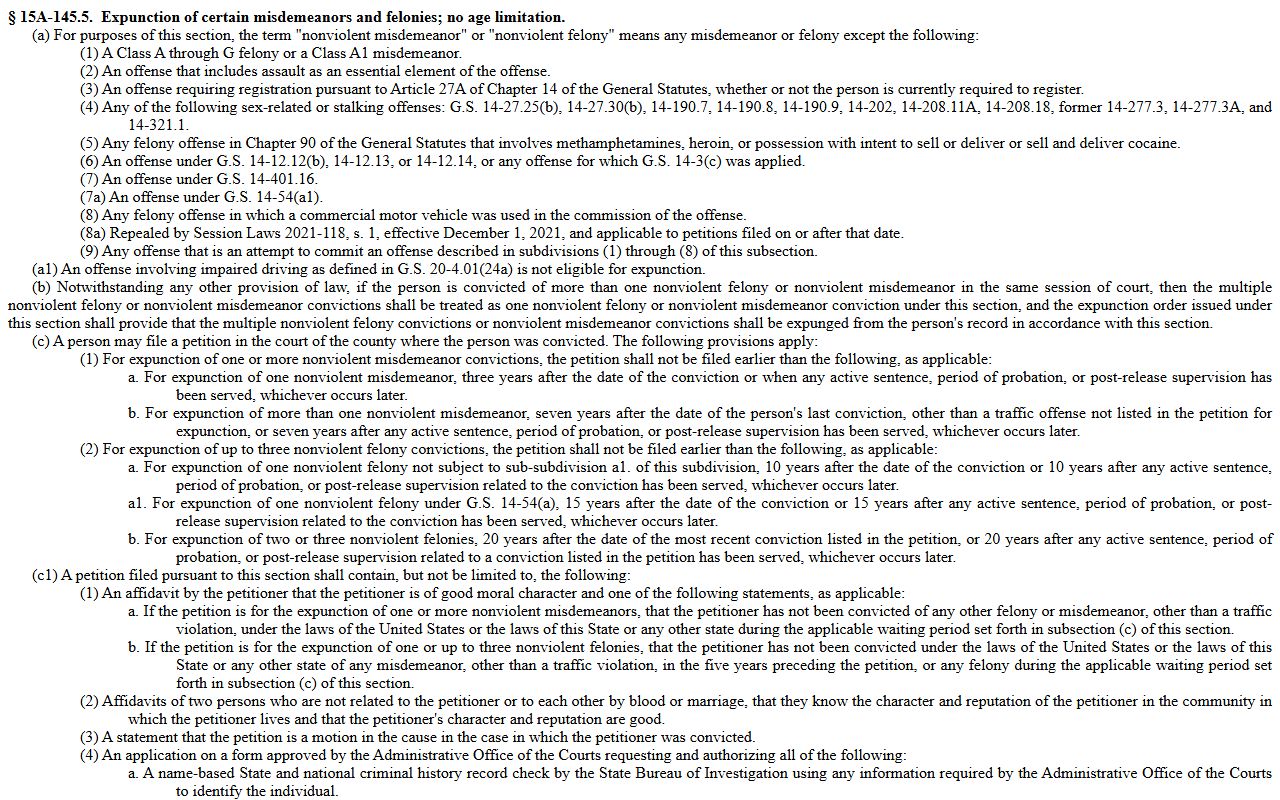
Qualifying criminal records including arrest records and court records can be permanently removed through the expunction process.
The Judicial Branch provides guidance on how to request criminal background checks and access court records.
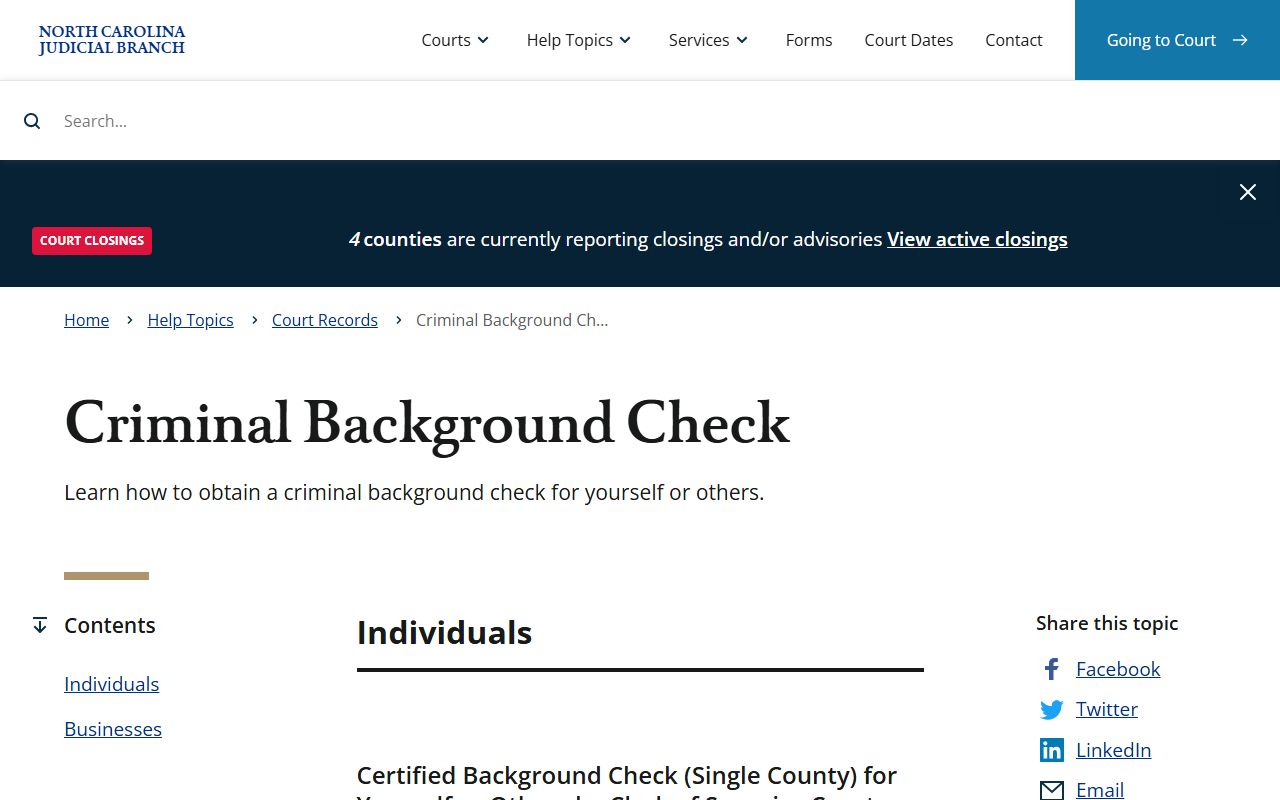
This resource explains how to obtain certified criminal records and court records through the clerk of court system.
Browse North Carolina Criminal Records by County
Each county in North Carolina has its own Clerk of Superior Court that keeps criminal records. Pick a county below to find local contact info and resources for criminal records in that area.
Criminal Records in Major North Carolina Cities
Residents of major cities can search criminal records at their county courthouse or through local police departments. Pick a city below for details.