
Polk County Criminal Records in Columbus NC
Polk County criminal records are maintained at the courthouse in Columbus, North Carolina. Located in the foothills of the Blue Ridge Mountains near the South Carolina border, Polk County is one of the smaller counties in the state. The Clerk of Superior Court handles all criminal case filings and record requests. Criminal records from both Superior and District Court are available for public inspection. Columbus serves as the county seat and houses all county court records.
Polk County Clerk of Court Criminal Records
The Polk County Clerk of Superior Court processes all criminal filings and maintains case records in Columbus. The office handles both felony cases in Superior Court and misdemeanor cases in District Court. Criminal records include the complete case file from initial charges through final disposition. Staff assist the public with locating records and providing copies during regular business hours.
Under N.C.G.S. 132-1, criminal records in Polk County are public and open for inspection. Anyone can visit the courthouse and request to review a criminal case file. The clerk can search by defendant name or case number. Standard copies and certified copies are available for applicable fees.
The NC Judicial Branch provides courthouse information for Polk County, including details on accessing criminal records.
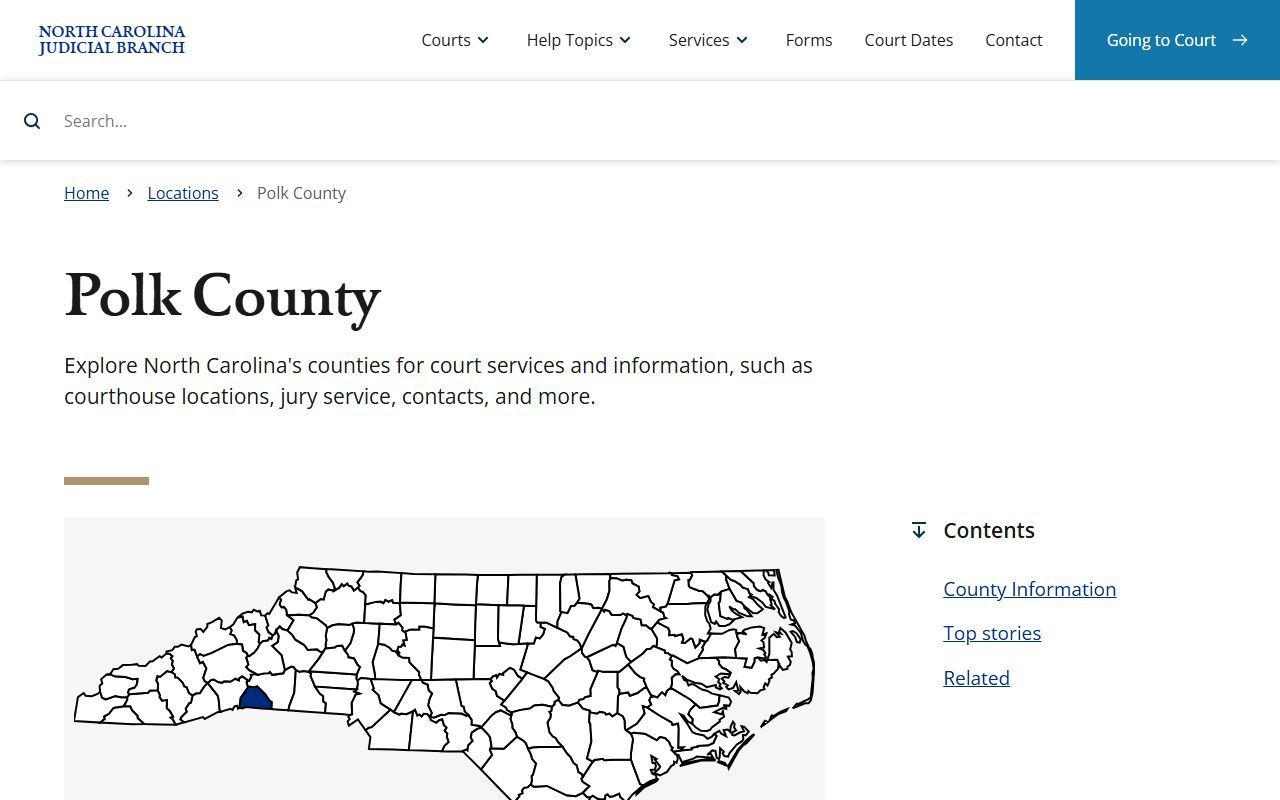
Visit nccourts.gov/locations/polk-county for hours, contact details, and directions to the Polk County courthouse.
Note: Polk County's smaller caseload often allows for quicker processing of criminal record requests compared to larger jurisdictions.
Polk County Sheriff Arrest Records
The Polk County Sheriff's Office at 40 Ward Street in Columbus maintains arrest and booking records for the county. Contact the office at (828) 894-3001 for arrest record inquiries. Each arrest in Polk County generates a booking record that documents the person's identifying details, the criminal charges, and bond information.
Arrest records from the Polk County Sheriff are public documents under North Carolina law. The Public Records Act grants public access to these records. Under N.C.G.S. 132-1.4, records tied to active criminal investigations may be temporarily restricted. Once the investigation concludes, the full arrest record becomes available in Polk County.
It is important to note that an arrest record from Polk County documents only the initial detention by law enforcement. It does not reflect any subsequent court proceedings or outcomes. Court records maintained by the clerk track the judicial process and eventual disposition of the criminal case. Both sets of records contribute to the overall criminal record picture in Polk County.
Searching Criminal Records in Polk County
You can search criminal records in Polk County by visiting the courthouse in Columbus or using online resources. In-person visits provide direct access to complete case files. Online tools offer basic case information that can be accessed remotely. The method you choose depends on the depth of information you need from Polk County criminal records.
The North Carolina eCourts portal at portal-nc.tylertech.cloud provides statewide access to criminal case data. You can search for Polk County criminal records by defendant name or case number. The system displays charges, scheduled court dates, and case outcomes. This portal covers all 100 North Carolina counties.
For in-person searches at the Polk County courthouse, bring a valid photo ID. The clerk's staff will search for criminal records and provide copies. Standard copies cost $0.25 per page. Certified copies carry an additional charge. Archived criminal records from Polk County may require extra time to locate and retrieve.
The NC Courts website offers detailed guidance on how to request court records from any county in North Carolina, including Polk County. This resource explains the types of records available and the procedures for obtaining them.
Note: Polk County sits near the South Carolina state line, so some criminal matters may fall under federal or South Carolina jurisdiction rather than Polk County courts.
Criminal Record Laws and Expunction
Criminal records in Polk County are subject to the North Carolina Public Records Act and related statutes. The general rule is that court records are open to public inspection. Exceptions apply to juvenile records, sealed cases, and expunged criminal matters. Active investigation files held by the Polk County Sheriff may also be temporarily restricted from public access.
Under N.C.G.S. 15A-145.5, certain criminal records in Polk County can be expunged. Qualifying individuals with nonviolent offenses may petition the court for removal of their record from public access. The petition is filed with the Polk County Clerk of Superior Court. Eligibility depends on the offense type, case outcome, and waiting period requirements.
The North Carolina State Bureau of Investigation provides statewide criminal background checks that go beyond a single county. An SBI check pulls criminal records from Polk County and every other jurisdiction in the state. This is the most comprehensive option for a full criminal history search in North Carolina.
What Polk County Criminal Records Contain
Criminal records from Polk County document each case from initial charges through final resolution. The record grows as the case progresses through the court system in Columbus, with each filing, hearing, and ruling adding to the permanent file. A typical record includes the defendant's name and identifying details, criminal charges, court dates, hearing outcomes, and the final disposition.
The disposition is the most critical part of any criminal record in Polk County. It shows whether the defendant was convicted, acquitted, or whether charges were dismissed. Sentencing details for guilty verdicts include fines, incarceration terms, probation conditions, and any restitution ordered. Criminal records in Polk County remain permanently on file at the courthouse unless removed by a court-ordered expunction.
Nearby Counties
These counties border Polk County. Criminal records are filed where the offense occurred, so confirm which jurisdiction applies before searching.